The Kounotori is a limited express service operated by JR West that runs between Shin-Osaka Station, Fukuchiyama Station in Kyoto Prefecture, and Kinosaki Onsen Station in Hyogo Prefecture. The train is named after the kounotori bird, an endangered species of Oriental white stork that is a symbol of Tajima province in northern Hyogo.
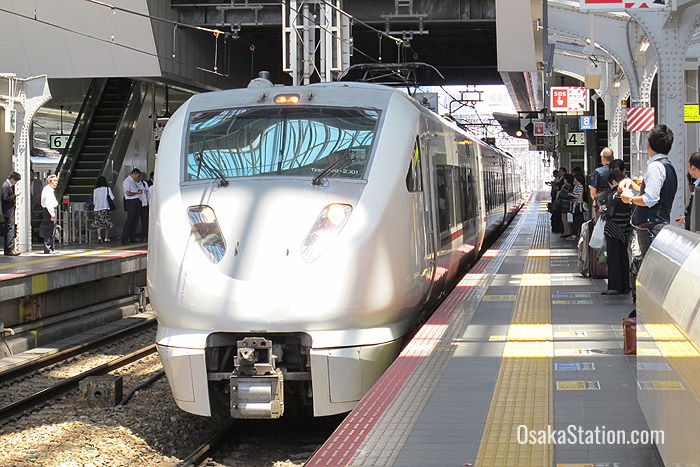
The Kounotori at Osaka Station
Not all Kounotori trains cover the full route between Shin-Osaka Station and Kinosaki Onsen Station. Some trains terminate at Fukuchiyama Station, and passengers bound for Kinosaki Onsen Station can transfer there to another train. On some seasonal operating dates, a Kounotori service may also be extended between Fukuchiyama and Amanohashidate Station in the north of Kyoto Prefecture, so check the current timetable if you are traveling during busy holiday periods.
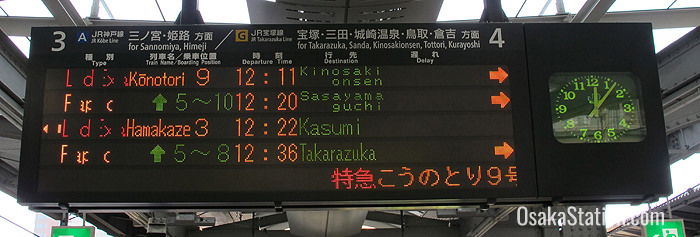
Platform information at Osaka Station
Key Destinations
The following stations are on the route of the Kounotori service. Stations in brackets [] are not served by all trains.
Shin-Osaka – Osaka – Amagasaki – Takarazuka – Sanda – [Shin-Sanda] – [Aino] – Sasayamaguchi – [Tanikawa] – Kaibara – [Kuroi] – Fukuchiyama – [Wadayama] – [Yoka] – [Ebara] – [Toyooka] – [Kinosaki Onsen]
Below are the locations you are most likely to visit. Fares and approximate train times given below are from Shin-Osaka Station.
Fukuchiyama Station
The main attraction in the town of Fukuchiyama is its castle, which dates from the 16th century. Other than that, this is an important transfer point for those traveling between the cities of Osaka and Kyoto in the south, and the scenic towns of Kinosaki and Amanohashidate in the north.
Train fare: 4,370 yen for an ordinary reserved seat in the normal season
Train time: 1 hour and 40-45 minutes approximately
Kinosaki Onsen Station
Kinosaki is a charming hot spring resort town on the Japan Sea coast with over 1,300 years of history. The town is incredibly picturesque, with beautifully preserved traditional architecture and a river lined with willows and cherry trees that runs through its center. One of Japan’s best known spas, the town is also known for its seafood cuisine, particularly crab when in season, and for the local variety of black Wagyu beef, called Tajima beef.
Train fare: 6,140 yen for an ordinary reserved seat in the normal season
Train time: 2 hours and 45-55 minutes approximately
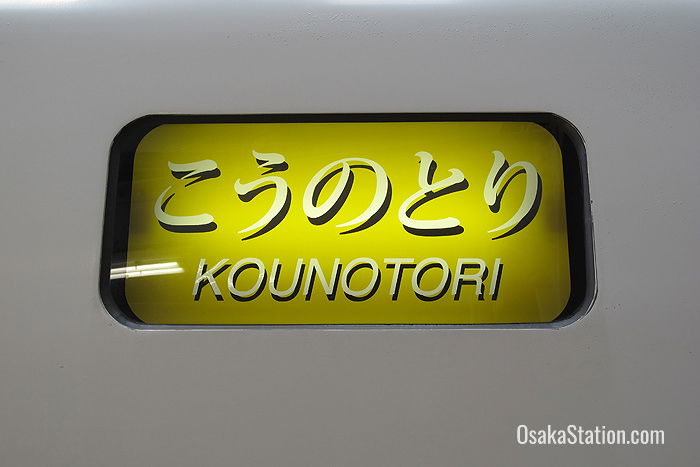
Carriages are flagged in Japanese and English
Useful Information
Current timetables show around 14 Kounotori trains departing from Shin-Osaka on many days. Destinations vary by date and train: some go all the way to Kinosaki Onsen Station, some terminate at Toyooka Station in Hyogo Prefecture, and others terminate at Fukuchiyama Station in Kyoto Prefecture. Kounotori trains also make the return journey to Shin-Osaka through the day from Fukuchiyama or from stations farther north.
Kounotori trains are all-reserved limited express services, so you should reserve a seat before boarding. At Shin-Osaka Station, Kounotori services normally depart from the conventional-line limited express platforms, with current timetable data showing platform 10. At Osaka Station they usually depart from platforms 3 or 4. Always check the station departure boards, as platforms and stopping patterns can change by train and date.
This limited express service is covered by the Japan Rail Pass for ordinary-car travel, but pass holders should still obtain a seat reservation because the train is all reserved. Green Car seats are covered by a Green Car Japan Rail Pass; ordinary pass holders need to pay the required additional charges if they use Green Car accommodation.
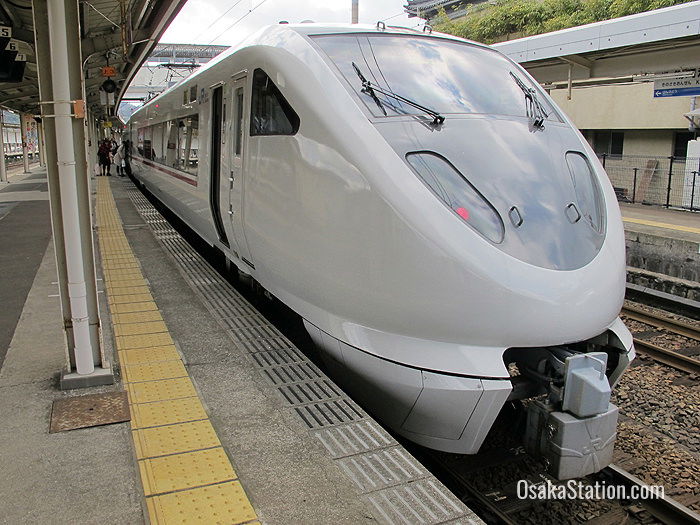
The Kounotori at Kinosaki Onsen Station
To look up connection times quickly and easily use the JR West Route Maps and Timetables page.
Article and original photos by Michael Lambe. All rights reserved. Last updated 31-Jul-2026.