The Nankai Main Line is a private rail line, operated by Nankai Electric Railway, that runs between Nankai Namba Station in central Osaka and Wakayamashi Station in Wakayama City.
Because the Nankai Main Line is a private railroad, it is not covered by the Japan Rail Pass, but there are some other discount options which we will examine at the end of this article.
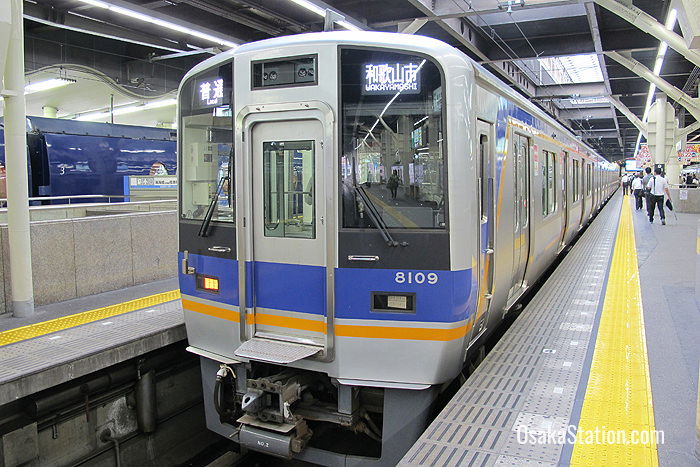
A local train bound for Wakayamashi at Nankai Namba Station
Key Destinations
The Nankai Main Line runs south from Nankai Namba through Sakai, Kishiwada, Izumisano and Misaki before reaching Wakayamashi. Through trains bound for Kansai International Airport follow the Nankai Main Line until Izumisano Station, where they continue onto the Nankai Airport Line.
For many destinations between Nankai Namba Station and Izumisano Station it may be quicker to use the Airport Express train for at least part of your journey. Limited Express Southern trains also run between Nankai Namba and Wakayamashi or Wakayamako. These 8-car trains have 4 reserved-seat cars and 4 unreserved-seat cars. The unreserved cars can be used with the ordinary fare, while reserved seats require a separate limited express or reserved-seat ticket.
Use an English language online route finder like Jorudan or Navitime to find suitable trains and transfers for your journey. The key destinations and transfer points on the Nankai Main Line are listed below with fares and train times given from Nankai Namba Station.
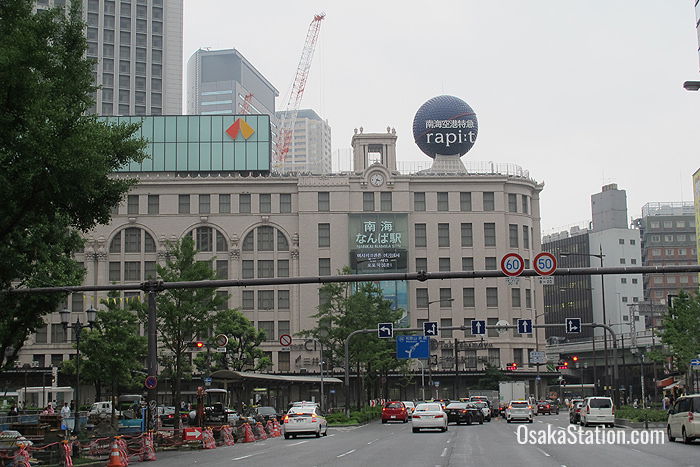
Nankai Namba Station
Nankai Namba Station
Namba is a popular commercial and entertainment area in central Osaka and Nankai Namba Station is one part of a major city transportation hub. Nankai Namba Station is easily accessed, either directly via the Nankai Main Line, or indirectly via three other nearby stations: JR Namba Station, Osaka Namba Station, and Osaka Metro Namba Station.
JR Namba Station is accessed by the JR Yamatoji Line. Osaka Namba Station is accessed by the Kintetsu Namba Line and Hanshin Namba Line. Osaka Metro Namba Station is accessed by the Midosuji, Sennichimae, and Yotsubashi lines.
Shin-Imamiya Station
This station in central Osaka can be accessed by the Osaka Loop Line or the Yamatoji Line. Dobutsuen-mae Station is nearby and can be accessed by the Midosuji and Sakaisuji lines of Osaka Metro.
Train fare: 180 yen
Train time: about 2 to 3 minutes
Tengachaya Station
This station is in the Nishinari Ward of Osaka. Nankai Main Line and Nankai Koya Line services stop here, and it is also the southern terminus of the Sakaisuji line of Osaka Metro.
Train fare: 180 yen
Train time: about 4 to 6 minutes
Sumiyoshitaisha Station
Exit here for Sumiyoshi Park and for Sumiyoshi Taisha Shrine. This historic shrine has origins traditionally traced back around 1,800 years, and is famous for its graceful Sorihashi Bridge and four main halls designated as National Treasures.
Train fare: 240 yen
Train time: about 9 minutes by local train
Hamaderakoen Station
This station is convenient for Hamadera Koen Park, which is famous for its pine trees and for its extensive rose garden. The historic 1907 wooden station building was designed by Tatsuno Kataoka Architectural Office and is a registered tangible cultural property. Nankai Main Line elevation works mean station services use a temporary building, while the old station building has been relocated and used as a cafe, gallery, and community space. Transfers can be made at nearby Hamadera-ekimae Station to the Hankai tramway.
Train fare: 370 yen
Train time: about 22 to 24 minutes, depending on service and transfer
Hagoromo Station
Transfer here to the Nankai Takashinohama Line for Takashinohama Station. JR Hagoromo Line access is also available nearby.
Train fare: 420 yen
Train time: about 15 to 16 minutes by faster services
Kishiwada Station
This station is convenient for the Kishiwada Danjiri Matsuri, a famous float festival known for high-speed float pulling and sharp turns through the streets. The festival is held in two main periods, with Kishiwada and Haruki district events in September and other district events in October.
Train fare: 540 yen
Train time: about 25 to 26 minutes by faster services
Takojizo Station
This station is convenient for Kishiwada Castle. Local castle origins are traced to 1334, while the keep completed by Koide Hidemasa in 1597 later burned down in 1827. The present concrete keep was rebuilt in 1954, and the castle grounds include Hachijin Garden, a nationally designated Place of Scenic Beauty.
Train fare: 540 yen
Train time: about 29 to 37 minutes, depending on transfer and service
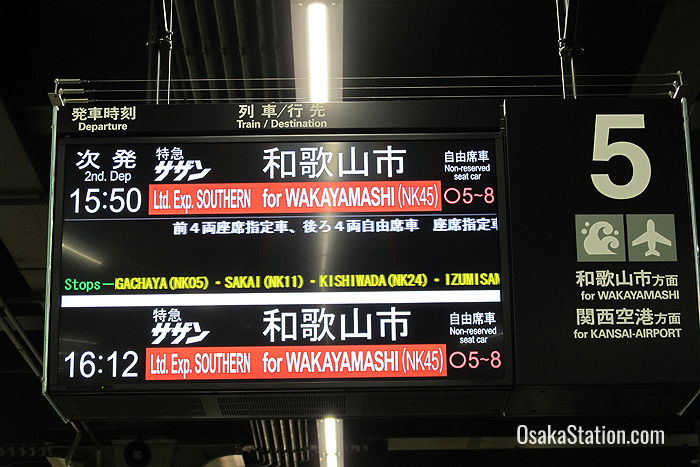
Departure information is given in Japanese and English
Izumisano Station
Transfers can be made here to the Nankai Airport Line for Kansai International Airport.
Train fare: 650 yen
Train time: about 30 to 38 minutes, depending on service
Misaki-koen Station
Transfer here to the Nankai Tanagawa Line. The former Nankai-run Misaki Park amusement park closed on March 31, 2020 after roughly 63 years of operation, but Misaki-koen Station remains a transfer point on the Nankai Line.
Train fare: 850 yen
Train time: about 46 to 61 minutes, depending on service
Kinokawa Station
Transfer here to the Nankai Kada Line.
Train fare: 930 yen
Train time: about 63 to 71 minutes, depending on service and transfers
Wakayamashi Station
Wakayamashi Station in the city of Wakayama is the southern terminus of the Nankai Main Line. Wakayama city’s biggest tourist attraction is Wakayama Castle. First built in the 16th century, the castle tower burned in the 1945 Wakayama air raid and was reconstructed in reinforced concrete in 1958. The Kuroshio Market in Wakayama Marina City is another popular attraction. Here you can buy fresh seafood, watch a whole tuna being filleted, or eat in one of many seafood restaurants.
Transfer here to the Nankai Kada Line, the Nankai Wakayamako Line, or to JR West’s Kisei Main Line.
Train fare: 970 yen
Train time: about 59 to 60 minutes by Limited Express Southern, with longer non-limited routes also available
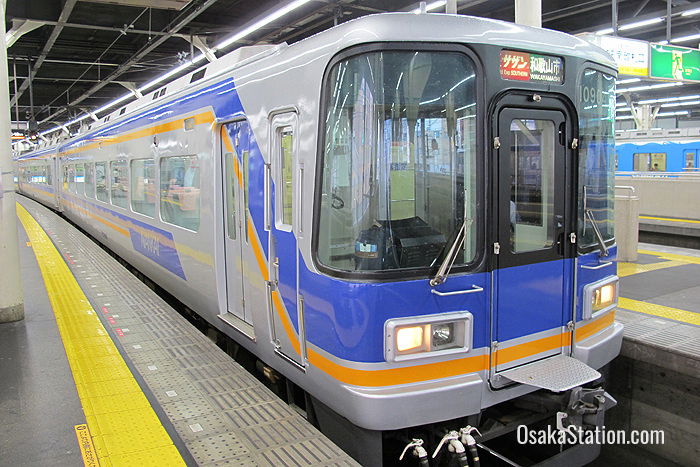
A Limited Express bound for Wakayamashi at Nankai Namba Station
Discount Tickets
The Nankai Main Line is not covered by the Japan Rail Pass, but there are alternatives. The KANSAI RAILWAY PASS LITE is a digital pass for foreign visitors that covers many metro and private railway services across Kansai, including Nankai Railway, but it does not cover JR trains, buses, Kyoto City Subway, Keihan Otsu Line, Randen, and some other services. For the 2026 season, an adult 2-day pass costs 5,200 yen and an adult 3-day pass costs 6,500 yen, with sales from March 25 to September 30, 2026. Reserved-seat limited express fees on Nankai trains require separate payment.
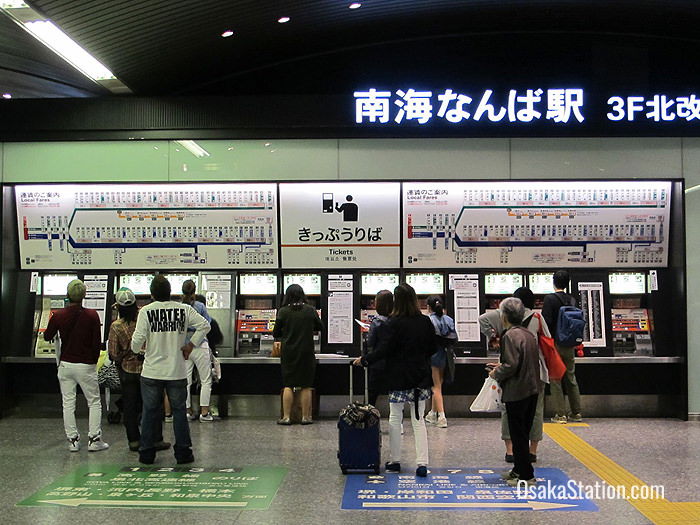
Buying tickets at Nankai Namba Station
Nankai also offers digital sightseeing tickets that may be useful for trips into Wakayama. The Wakayama Sightseeing Digital Ticket includes a roundtrip ticket to Wakayamashi and a 1-day pass for Wakayama Bus and Wakayama Bus Naga routes, excluding some routes. The Kada Sightseeing Digital Ticket includes a roundtrip ticket to Wakayamashi and a 1-day pass between Wakayamashi and Kada.
The Osaka Amazing Pass is a digital sightseeing pass for Osaka. In 2026, a 1-day pass costs 3,500 yen and a 2-day pass costs 5,000 yen. It covers Osaka Metro, Osaka City Bus, and limited Osaka-city sections of private railways including Nankai, but it is not a full Nankai Main Line pass to Wakayamashi. Reserved-seat limited express fees are also separate.
Please note that these discount options do not cover JR Railway lines.
Article and original photos by Michael Lambe. All rights reserved. Last updated 08-Aug-2026.